L’ anabase
Three decades of revolutionary existence
James Gabrillo checked in from Abu Dhabi to see the French film L’anabase from Eric Baudelaire.
The number two plays many roles in Eric Baudelaire’s documentary L’anabase (The Anabasis of May and Fusako Shigenobu, Masao Adachi and 27 Years Without Images). Two journeys are taken: The first is a return to the past. The other, a journey towards the unknown. The paths are taken by two protagonists: May Shigenobu, daughter of Fusako Shigenobu, the founder of the Communist terrorist group Japanese Red Army, and Masao Adachi, the renowned Japanese avant-garde filmmaker and JRA member. As their stories intertwine, both take turns in narrating the film.
For the first 27 years of her existence, May Shigenobu lived "without images" — that is, hidden in the underground, unaware of how the rest of the world lived. Born in secrecy in Lebanon, where the JRA is based, her situation changed drastically when her mother was arrested in 2000. She was all so suddenly catapulted into the limelight, bared open for public scrutiny. At the same time, she is, in a sense, reborn — finally able to take hold of her life, able to make her own decisions, choose which path to take.
But being raised in a radical environment does things to you — and Shigenobu is aware of that. With reinvention comes retrospect, which she does in the film, looking back at three decades of a revolutionary existence. How do you move on? Can you? What now?
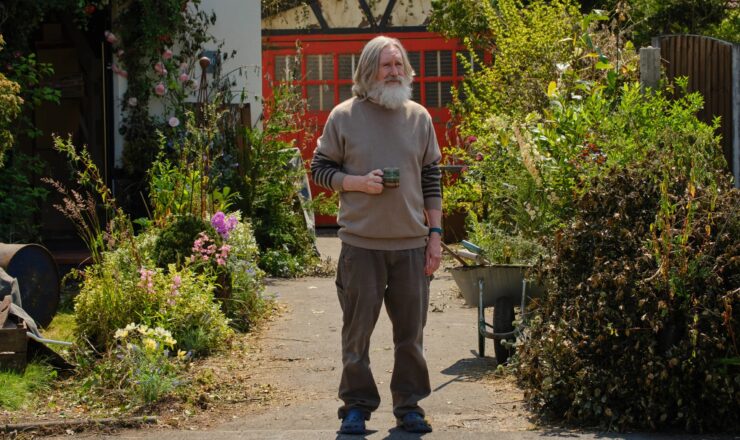
Masao Adachi joined the JRA in 1974 and for the next 27 years, left behind everything familiar, venturing into danger and destruction. Throughout his exile, he forged a film movement that sought to reveal the structures of power by filming landscapes; he called it the fûkeiron, or the theory of landscape.
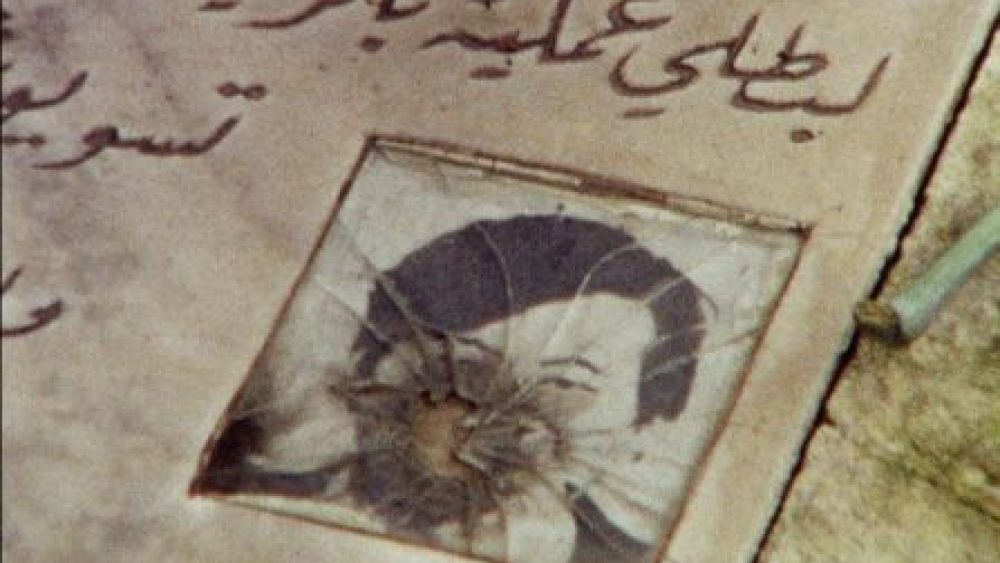
L’anabase itself adheres to Adachi’s fûkeiron style, showing endless but elegant montages of one landscape sequence to another — in two areas, Tokyo and Beirut. Similar to its structure and characters, it employs two storytelling paths: personal and political propaganda. Violence or suffering are not portrayed, but pain can be felt throughout the 66-minuter, filmed in Super8. The theme of terrorism, after all, is antagonism.
While the young Shigenobu lived a life devoid of images of the outside world, Adachi devoted his to images. While with the JRA, he had on many an occasion no choice but to use nothing but his mind and memory to preserve the images he encountered.
L’anabase makes us question Adachi’s intentions. Here is a man dedicated to his political beliefs, as well as — and one can say, equally — to his art. Why then abandon cinema for the sake of the revolution? Would he have done a better job back home in Tokyo, making films that would have taught his countrymen and the world a thing or two about the revolution? Or is it that Adachi considers the revolution itself to be a film, his film, his career’s masterpiece: It begins with activism, then slowly climaxes into an armed struggle, then suddenly ends with a collapse of ideology.
His path and that of Shigenobu’s — and, evidently, of the film itself that chronicles their fragmented stories — are marked by discipline. Here are paths to take, your options, now choose; then, live with your decision, settle with the repercussions, and hope for the best in the future. Curiously, quite Japanese.
The film is a study in the construction of identity: that the search could take you to the other side of the world, that history would somehow fail you, that things would collapse and then rouse and then collapse and then rouse and then…
James Gabrillo
L’anabase (Eric Baudelaire, France 2011, 66′)