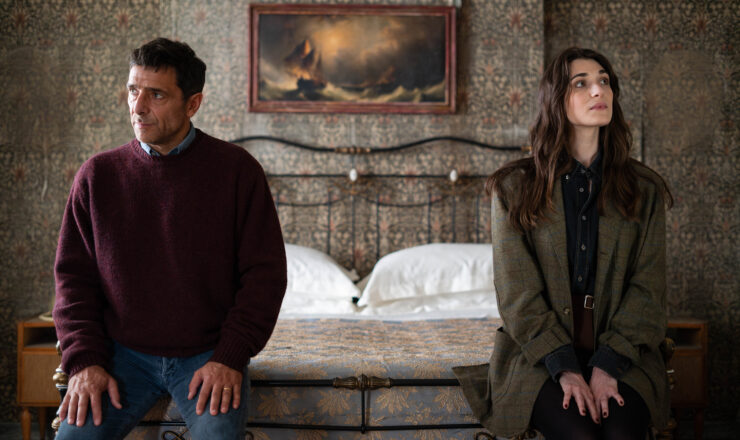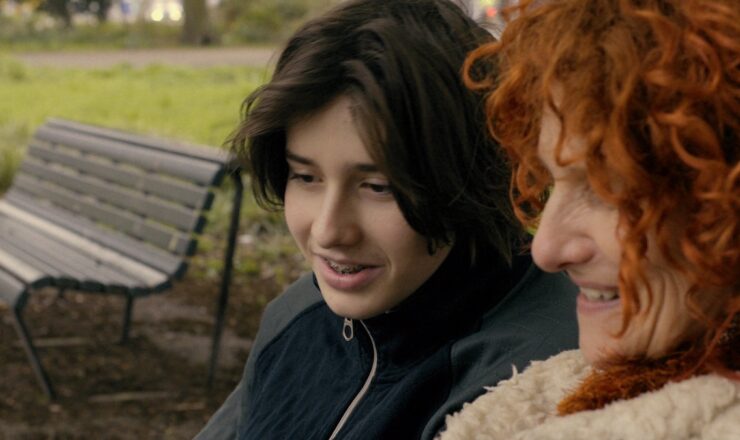
Matei Child Miner (Matei copil miner)
An Evaluation-free Review
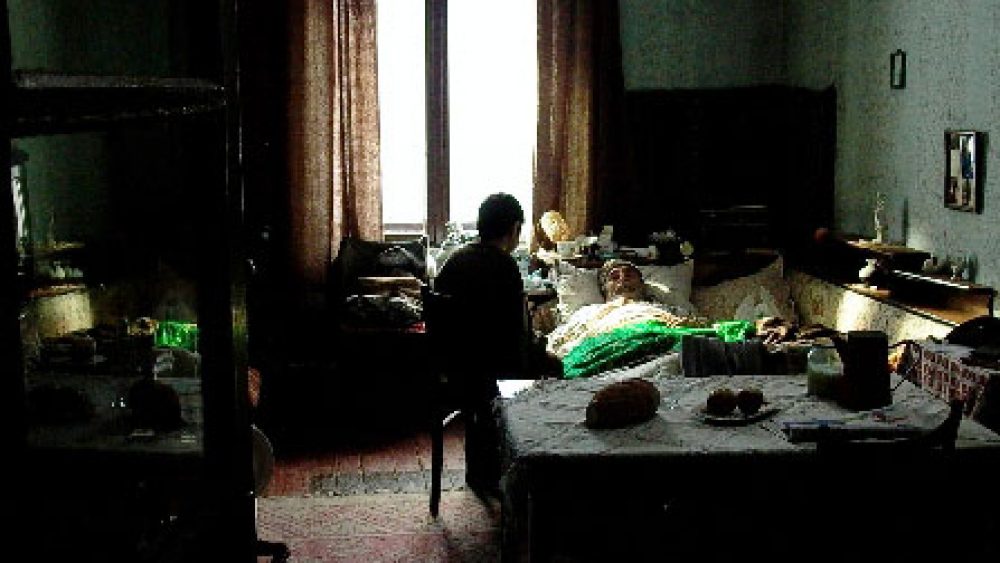
Gabe Klinger checks in from Chicago and makes a plea to stop watching films on computer screens: he is looking forward to revisiting Alexandra Gulea’s Romenian film Matei Child Miner on a big screen to have it’s full social and lyrical impact resonate with him.
Around this time last year I was assigned to shed some light on a tiny, no-budget work from the Philippines called Ex Press in these very pages as part of Filmkrant’s annual Slow Criticism project. I viewed the film, a debut by Lav Diaz disciple Jet Leyco, on the miniscule screen of my MacBook Air via IFFR’s online portal. This viewing mode, more prevalent than ever today among journalists/critics who cover the international film festival beat, is, well, less than ideal for some of the obvious reasons that probably don’t need to be reiterated here.
But indulge me for a moment. It must be hard for someone like Jet Leyco, who works hard on his mise-en-scène, to see Ex Press reduced to a lower resolution and then to know his film is being seen that way by strangers all over the world… Let’s also not forget that these small screen viewings are generally solitary experiences where one’s opinion doesn’t have the possibility to be productively counterbalanced, a possibility that the social arena of a festival consistently offers. A few days after watching Ex Press on my computer, I ran into a colleague who had seen the film in the theater during the festival… and loved it. Our views were opposite: I found it insufferable and mostly disparaged Leyco’s film in my review. But after talking about it I began to feel as though I may have missed what my colleague described as its inventive, confident sense of composition and lucid and original commentary on the post-colonial state in the Philippines. Pangs of regret raged through me. Several months later, sitting on a jury at a documentary film festival in Montreal, I rewatched Ex Press, which had been selected for our competition, and was blown away by all the details I had missed.
A year after my original assignment, I’m presented with a similar opportunity in these pages. I’ve accepted it gamely, only this time I’d like to introduce a simple caveat: my task will be descriptive and contextual rather than evaluative. I’ve watched my film, Matei Child Miner, and I can tell you that its subject, the tender and formative years of late adolescence, has a particularly rich lineage in the European art house narrative. If one thinks solely of such crusty entries as Bergman’s Fanny and Alexander, Fellini’s 8 ½, and Erice’s Spirit of Beehive — and filmmaker Alexandra Gulea is surely aware of all those — then one will not arrive at an understanding of the film’s unique aim.
Matei Child Miner is tethered between the lyrical heights of those earlier examples but combines a dream-like tone with methodical realism and social inquiry. In it own compact way, it accomplishes something similar to what Abbas Kiarostami set out to do in his Koker trilogy — that is, to tell an impressionistic story of an individual and slowly expand the microcosm to include an entire society. As one watches Matei, the 11 year old protagonist, one sees that Gulea is eager to reveal his intelligence to the audience. Matei Child Miner resists a bittersweet approach, allowing reality to intercede as it will. There’s much resonance to be found in this itinerant tale, and I look forward to seeing how it speaks to me when I visit it on the big screen, with an audience, this coming week.
Gabe Klinger