Disappearing Landscape
The Syntax of the Landscape
Paula Ruiz checks in from Madrid to see Vladimir Todorovic’s Disappearing Landscape, a meditation on travelling that takes the Serbian director to Singapore, the USA and Barcelona.
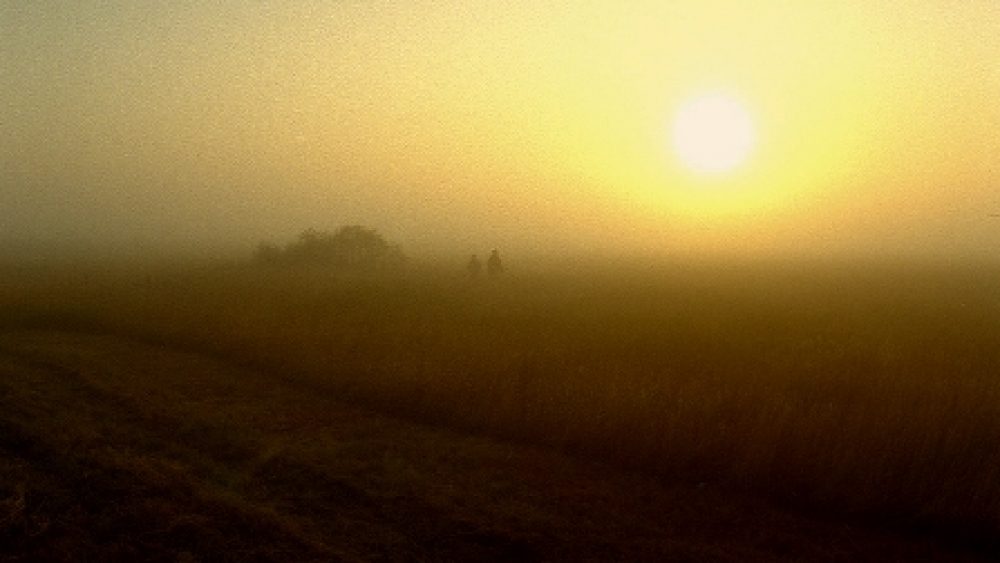
What does a landscape mean? What make us belong to a landscape? When does a landscape belong to us? For Serbian director Vladimir Todorovic (1977), the answers to all these questions might be found in grammar: a landscape could be some place here or could be some place there, some place now or then, some place of yours or some place of mine. It’s not a matter of geography but a matter of where you place yourself. In time and space. The syntax of the landscape is what his film, Disappearing Landscape, ultimately is about.
It is not by chance that Todorovic works with computer code and generative systems to produce narrative structures for different media. He is the co-founder of a media art collective called SYNTFARM, which studies our planet and our nature by digitally collecting and processing data from different environments. He also works as an Assistant Professor at the School of Art, Design and Media, NTU, in Singapore. And he is not a newcomer in cinema. Three years ago, his short film Silica-esc (2010) was awarded with a Special Mention for the category Computer Art at the Japan Media Arts Festival, and two years ago, he made his debut at International Film Festival Rotterdam with the feature Water Hands, a story about a journey from Singapore to Montenegro.
It is not by chance either that in Disappearing Landscape Todorovic repeats the motif of the journey: the movie tells three stories about what it means to be an immigrant nowadays. The first story follows a couple in present-day Singapore; the second is about a man who comes back home to Serbia after having lived in the U.S.A. for the last ten years; and the third looks to the future by presenting a young couple from South America in their new settlement: Barcelona, Spain. Perhaps because cinema has been always linked with the idea of travel, we see the characters of Disappearing Landscape as the spectators of their owns lives, trying to attach themselves to these landscapes that surround them in the same way that we, the real spectators, watch them on the screen, trying to empathize with their experiences.
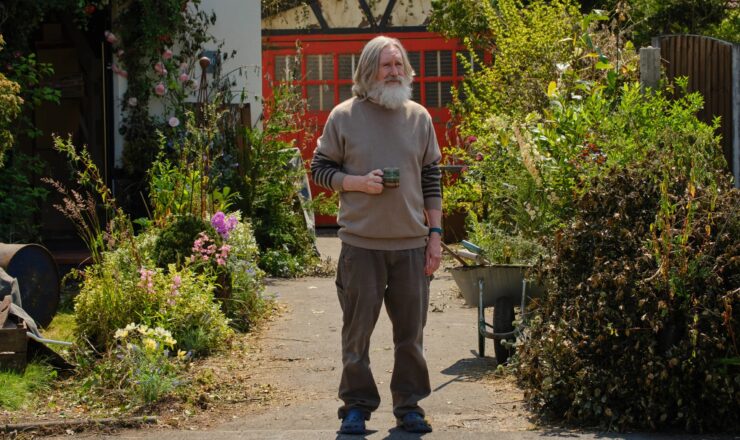
Unsurprisingly, ‘In the present’, the first story of the movie, draws up comparisons with Antonioni’s masterpiece L’eclisse. It should not be seen as an easy reference. As in that film, Todorovic tells the story of a young couple somehow suffering from the loneliness of modern life. But unlike the characters played by Monica Vitti and Alain Delon, those played by Machida Hiroyuki and Bobbi Chen insist in finding a way to survive together and not feel alienated by of their environment. At the end of the story, the couple travels to an island neighbouring Singapore where a coral plantation miraculously survives. This beautiful image stands, of course, as a metaphor for the main characters: isolated and trapped yet resistant in the middle of an industrial and violent landscape.
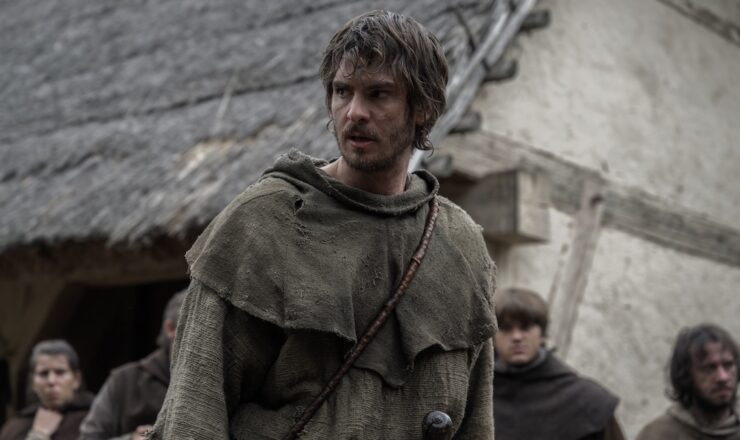
The second story of Disappearing Landscape, ‘From the past’, jumps backwards to show us the souvenirs of a man who is returning to his homeland. It’s not difficult to see here Todorovic’s own emotions, as he has been away from Serbia for a long time. Later on, when the closing credits roll, we find out that the story is based on a letter addressed to the filmmaker by his relative Marko Todorovic, but while watching it, the audience would trespass the screen to live in an oneiric landscape with a wide open sky and the laughter of children playing all around. This segment is probably the most enigmatic yet evocative and complex in the feature. We hardly see the main character as an adult during the story — only in a few frames where he is biking around his hometown — so, in a way, he disappears from the landscape he is showing to us, a landscape that no longer belongs to reality but to his memories, his past, the stream of his imagination.
The last story of Disappearing Landscape touched me deeply because it takes place in my hometown, Barcelona, a city whose landscape, like the character of ‘From the past’, now belongs to my memories. ‘Hacia lo desconocido’ shows a trip to the countryside of a young couple from Colombia and Chile that lives in Barcelona. Actually, nothing really happens during this trip, just a few conversations about finding a job and the uncertainty of the future, but the apparent lightness of those talks reveals a transcendental experience: the very moment before facing some decisions. Some might describe this trip as a landscape of a holiday. I’d rather think of it as a landscape of a hiatus.
Paula Arantzazu Ruiz (Barcelona, 1979). Journalist. Cultural criticist. Academic researcher. She loves going to the movies. She writes for online media (Sensacine, Contrapicado, Détour, Transit) and the Spanish newspapers La Cartelera/Levante and PLAY/ARA, and magazines such as Cultura/s and H Magazine. She is currently working on her PhD at Universitat Pompeu Fabra (Spain). lacopadeeuropa.blogia.com @paulaarantzazu